South Africa holds one of the richest concentrations of large wildlife on the planet. That is the whole appeal of a safari in the Kruger or a cage dive off Gansbaai. It also means tourists share the country with several animals capable of killing a human being in seconds. Knowing which species pose real risks, where they live, and how to behave around them is the difference between a remarkable trip and a hospital visit.
Most visitors come and go without incident. The point of this article is not to alarm but to give you the practical picture. For trip planning beyond wildlife (routes, regions, accommodation, when to go), the South Africa travel guide is a useful starting point.
The Big Five
The expression dates back to colonial hunters who ranked these animals by how difficult they were to kill on foot. Today it sells safari packages, but the danger remains real for anyone who leaves a vehicle in a national park.
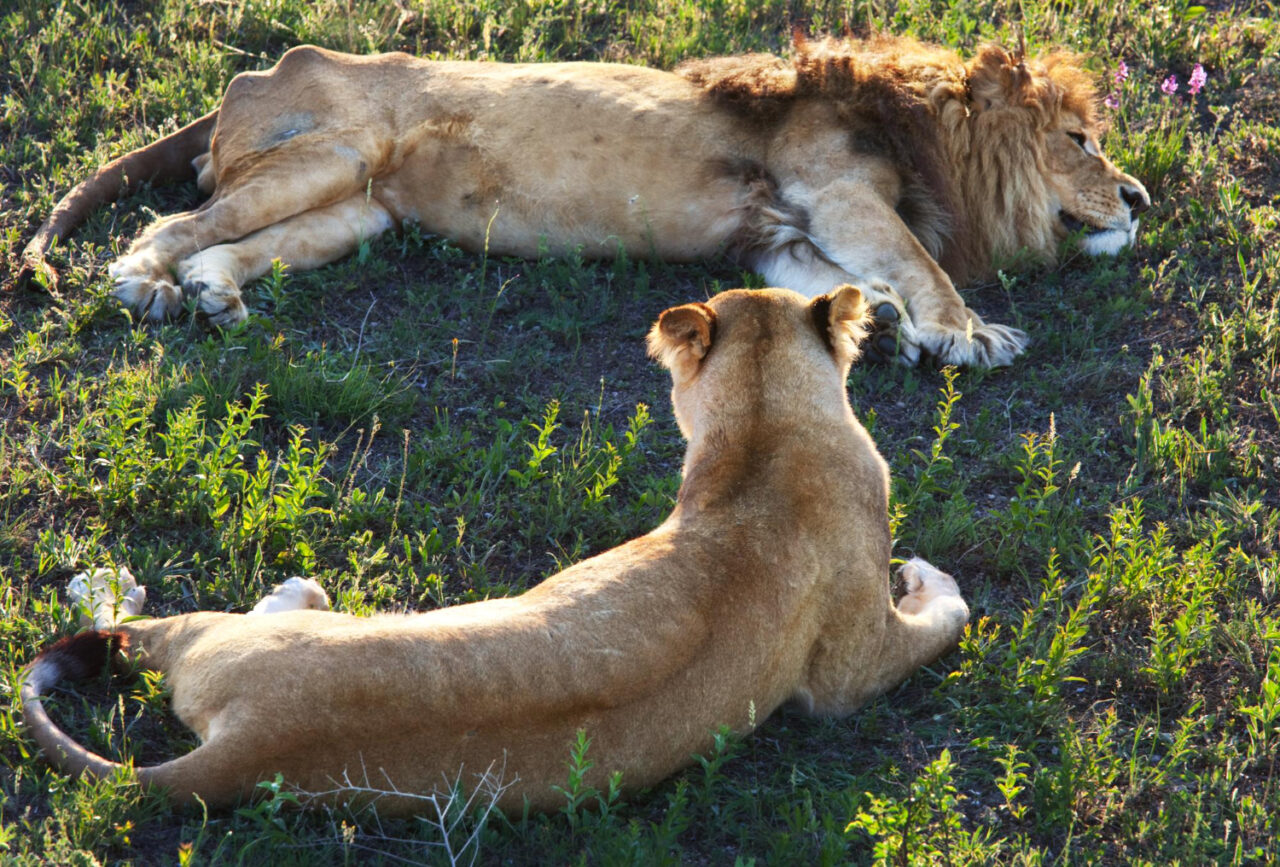
Lion. Found in Kruger National Park, the Kgalagadi Transfrontier Park, and most private reserves of the Sabi Sand or Madikwe. Attacks on tourists are rare because lions generally avoid vehicles. The risk increases at night, on foot, or near a fresh kill.
Leopard. Solitary and nocturnal, harder to spot than to encounter. Leopards rarely attack humans, but an injured or cornered animal is unpredictable. Sightings in Sabi Sand are among the best in Africa.
Elephant. Probably the most dangerous of the five for visitors. A Loxodonta africana bull in musth (a hormonal state) or a cow with calves will charge without warning. Several hundred people are killed by elephants across Africa every year. Give them a wide berth and never approach a herd on foot.
Rhinoceros. Both the white and black rhino live in South Africa, the black being more aggressive. Poor eyesight makes them charge at perceived threats. Black rhinos in Hluhluwe-iMfolozi or Pilanesberg should be observed only from a vehicle.
African buffalo. Old solitary males, known locally as dagga boys, are responsible for many of the most serious goring incidents in the bush. They will ambush hunters and have been recorded killing predators. Guides treat them with more caution than lions.
The animals that actually kill the most people
Sub-Saharan statistics tell a different story than the Big Five marketing.
Hippopotamus. The hippo is responsible for more human deaths in Africa than any other large mammal. It is territorial, fast on land (around 30 km/h), and will bite a small boat in half. In South Africa, hippos live in the St Lucia estuary, the rivers of the Limpopo, and parts of the Kruger. Never walk between a hippo and the water. Never paddle a canoe at dusk in iSimangaliso.
Nile crocodile. The Olifants and Crocodile rivers, Lake St Lucia, and the lower stretches of the Limpopo hold large populations. A full grown Crocodylus niloticus exceeds five metres. Do not swim, wash, or fish from low banks in known crocodile waters. The standard advice from local rangers is to stay at least three metres back from any water that could hold one.
Snakes
If you are interested in a similar overview for another wildlife-rich destination, the article on the most dangerous animals to encounter in Costa Rica offers a useful comparison.
South Africa has about 170 snake species. Roughly thirty can deliver a medically significant bite. Four matter for visitors.
Black mamba. Dendroaspis polylepis. The most feared snake on the continent. Long (up to four metres), fast, and equipped with a neurotoxic and cardiotoxic venom that kills without antivenom within hours. It is widespread in the bushveld of Mpumalanga, Limpopo, and KwaZulu-Natal. The good news is that mambas avoid humans when they can.
Cape cobra. Naja nivea. Highly venomous, common in the Western and Northern Cape. Often found in dry rocky terrain and around farm buildings.
Puff adder. Bitis arietans. Responsible for the largest number of severe bites in South Africa, not because it is the most toxic but because it is slow, well camouflaged, and lies on paths waiting for prey. Watch the ground, especially at dawn and dusk.
Boomslang. Dispholidus typus. A tree snake with rear fangs and a haemotoxic venom that causes massive internal bleeding. Bites are uncommon but extremely serious. The herpetologist Karl Schmidt died in 1957 documenting his own boomslang bite.
If you are bitten, do not cut, suck, or apply a tourniquet. Keep the limb still, get to a hospital, and remember what the snake looked like.
Sharks
The South African coast is one of the world’s hotspots for the great white shark. False Bay, Mossel Bay, and Gansbaai are famous for cage diving and for shark research. Attacks on swimmers and surfers do happen, mostly at Plettenberg Bay, Port St Johns (notorious for bull shark attacks at Second Beach), and around Muizenberg.
Numbers are small in absolute terms. The Shark Spotters programme in the Cape monitors beaches with flags and sirens. Respect the flags. Avoid swimming at dawn, dusk, or in murky water, and stay out of river mouths after heavy rain.
The small things that hurt more often than the big ones
Mosquitoes. Anopheles mosquitoes carry Plasmodium falciparum, the most dangerous form of malaria. Risk areas in South Africa are low altitude regions of the northeast: the Kruger and the surrounding Limpopo and Mpumalanga lowveld, plus the far north of KwaZulu-Natal. Risk is highest from September to May. Talk to a travel doctor about prophylaxis before you go. Use DEET repellent and sleep under a treated net or in screened accommodation.
Scorpions. The genus Parabuthus contains the most dangerous species. Parabuthus transvaalicus lives in the arid north and can deliver a sting that requires hospital treatment. Shake out your shoes in the morning if you camp in scorpion country.
Spiders. The button spider (a Latrodectus species, close relative of the black widow) and the sac spider (Cheiracanthium) cause occasional medical issues. Fatalities are very rare.
African honey bees. Local bees can attack in swarms when disturbed. Multiple stings are dangerous, especially for allergic individuals.
Practical safety
For most visitors, the real risks reduce to four habits.
In the bush, never leave the vehicle unless your guide says it is safe. Do not stand up in open game drive vehicles. Keep your voice down at sightings.
Around water, assume hippos and crocodiles are present unless a local resident tells you otherwise. Do not wade, swim, or fish from low banks.
In malaria zones, take prophylaxis and protect yourself from bites. Symptoms can appear weeks after you leave the country, so tell any doctor you consult that you were in South Africa.
At the coast, respect lifeguard flags and shark warnings. Do not swim alone at dawn or dusk.
The animals listed above are dangerous because they are powerful and wild. Behaving sensibly around them is the price of seeing them in their own country.